 |
| About Great Lakes Shipwrecks • Shipwreck Map & Index • Great Lakes Scuba Diving • Buy Posters & Photos • Photo Blog • Links • Contact Us |
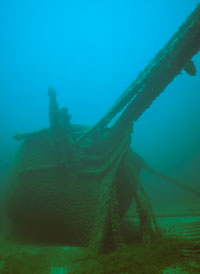 Sandusky story and photos coming soon |
 The old gang underwater |
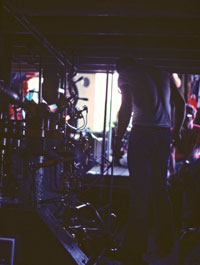 Dave Groover belowdecks on the Arbutus |
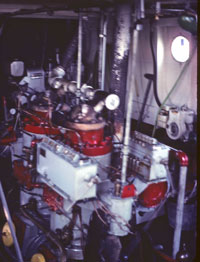 The mighty Kahlenberg two-cycle engine |
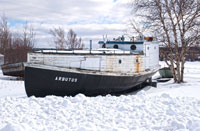 The Arbutus in winter |
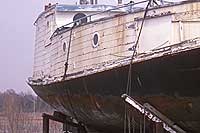 Arbutus drydocked in later years |
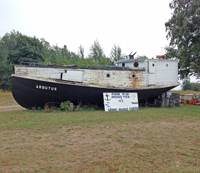 Arbutus advertising a fish store in Grand Marais, September 2014 |
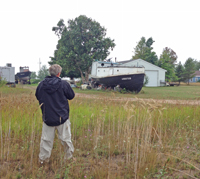 Bob photographing the Arbutus in Grand Marais |
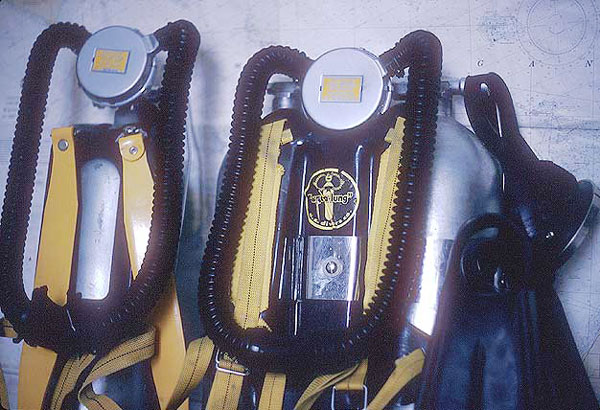
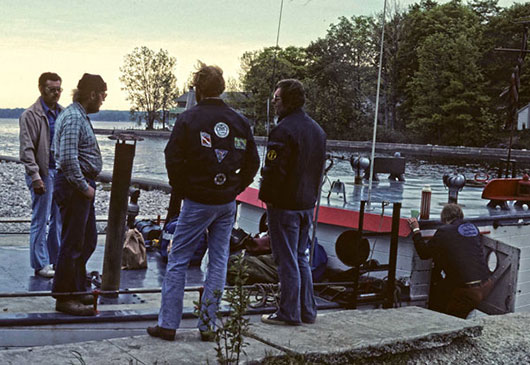
Great Lakes Scuba Diving: Looking Back As I write this in the spring of 2014, I have been diving for fifty years. It seems a long time. But it’s a short time in memories. I still vividly recall the first time I experienced the magic of breathing under water. It was in five feet of water at the shallow end of Godwin High School pool. I was wearing a Sportsways steel 72 with single hose Navy regulator. I still remember the instructor saying: “If it breathes like that in five feet, it will breathe just like that at 200 feet!” One of the older teachers at the pool sold me my first regulator, an early Cousteau-Gagnan twin hose for ten bucks. His words: “Don’t take it below thirty feet!” I spent the rest of the class training with the only double hose in their inventory. Graduating with that regulator I would shovel walks all winter and slowly piece together my first kit. Next spring, with the first open water dive in a cold inland lake 45 feet deep, the adventure would begin. May 31, 2014 It has been my fortune to spend time in the water with some really accomplished divers. I have also spent my share of time under with posers, egotists, and crazies. I remember one late summer night running up Lake Michigan in Dave Groover’s forty-foot fishing tug, the Arbutus. Diving from an old tug was really cool then. The Lake was rough that September night. We took turns throwing the wheel as the tug slid down the back of a wave; then throwing it back the other way as it buried the bow into the next wave. Each wave would bring green water cascading down the deck and crashing into the pilot house windows. The boat’s wooden hull pulsed alive under our feet with each revolution of the two-cylinder Kahlenberg diesel; chug chug chug. It was hard work. But we felt alive! My friends and I did a lot of diving from that tug. I don’t think we ever thought about it ending. But it did. As I roll off my boat the cold water hits hard, as expected. Dropping down the line, the wreck is viewed at about forty feet. I leave the line for a leisurely swim over and along the starboard side; stopping to shoot a couple of photos of the figurehead. Then it’s out into the sand for a couple of bow shots before cruising up and inside the hull. I’m mostly alone now except for the ghosts. Sometimes they will appear, out of the gloom. In the corner of the mask, I see them flip onto their back, hit the chest mounted exhaust valve, turn back over and flutter out of sight. June 1, 2014 A lot has happened since 1980: computers, mixed gas, advanced training. Fifty years is a long time. |
Home • About Great Lakes Shipwrecks • Shipwreck Map & Index • Great Lakes Scuba Diving • Buy Posters & Photos • Photo Blog • Links • Contact Us